My oh my, river deep, mountain high.


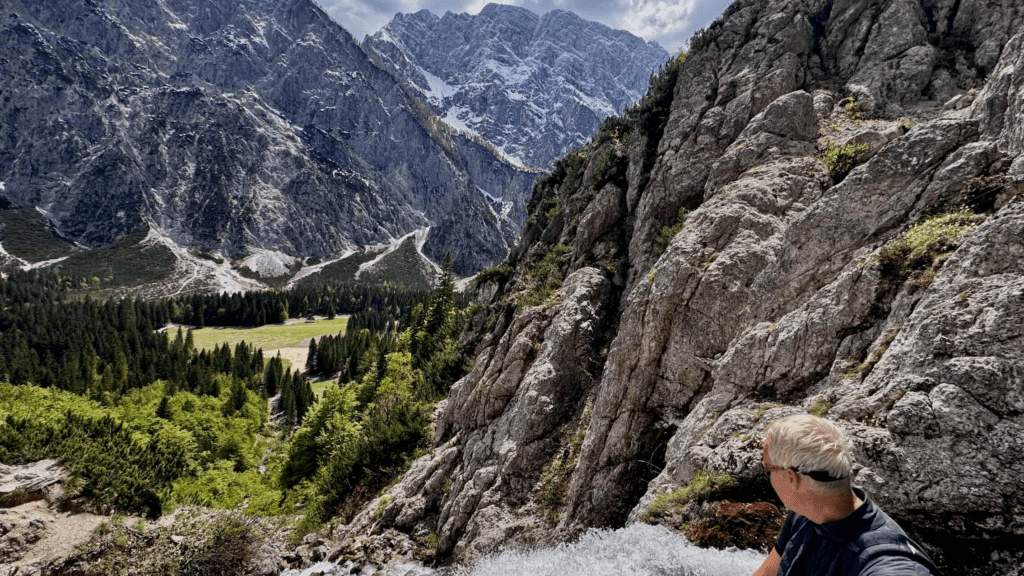
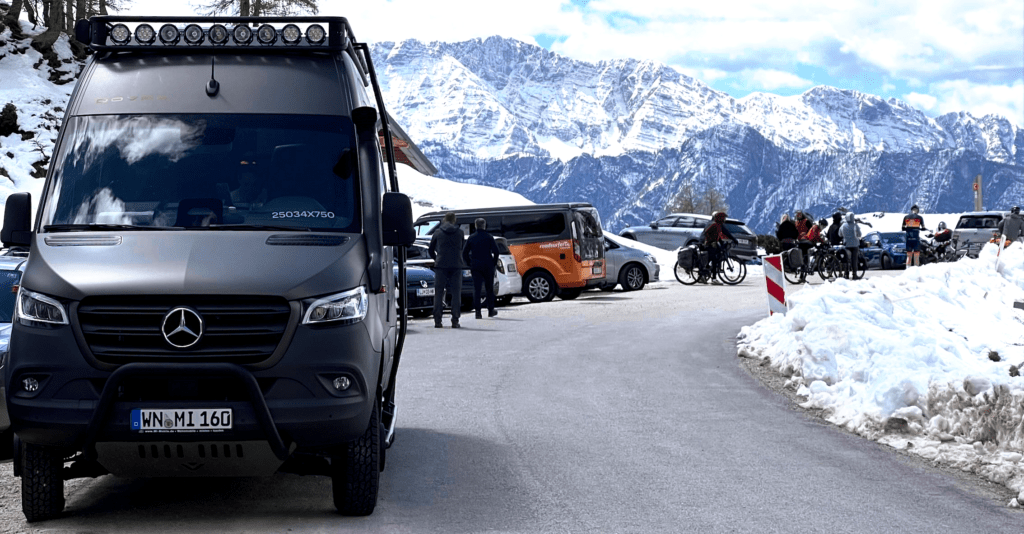


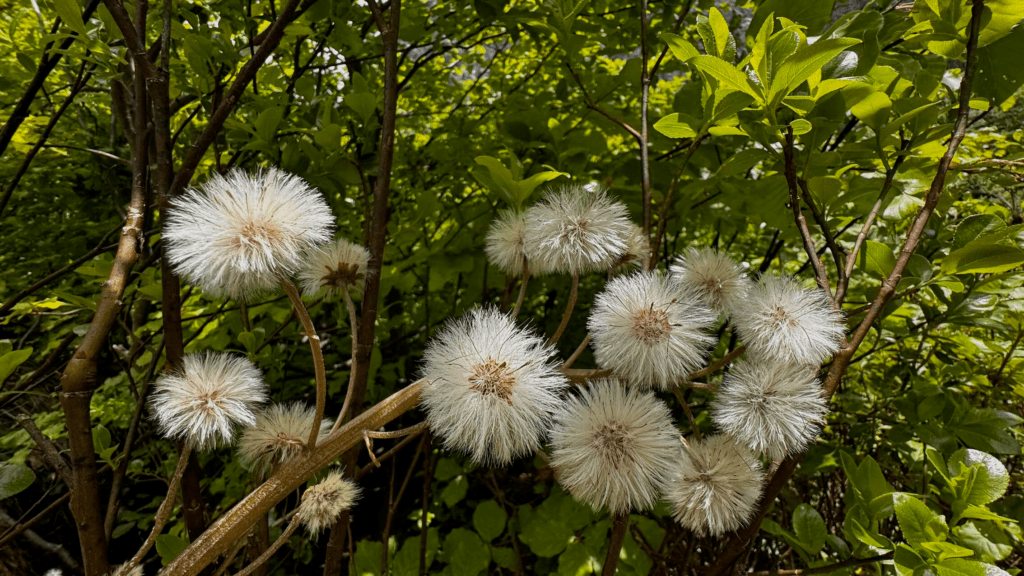

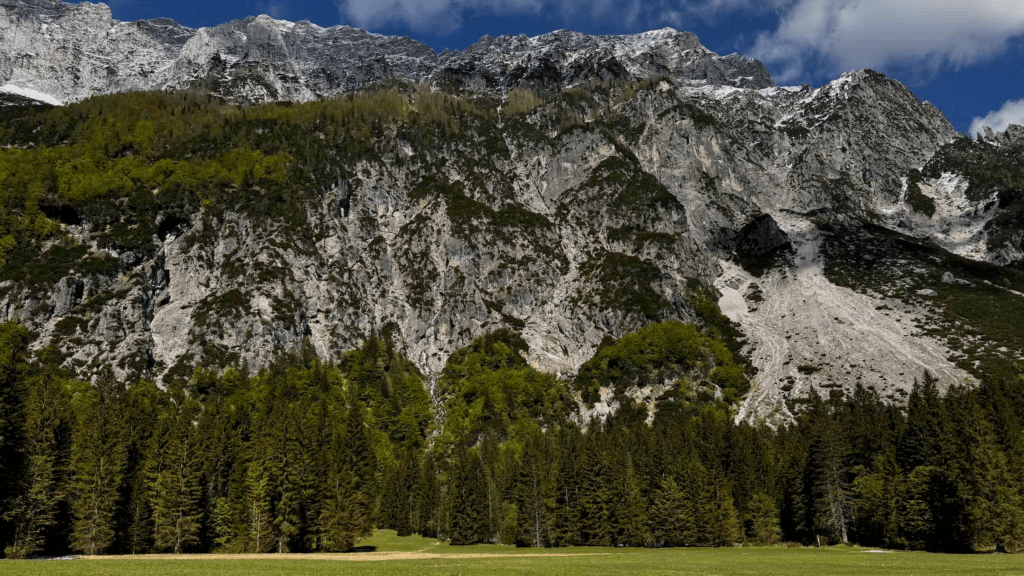


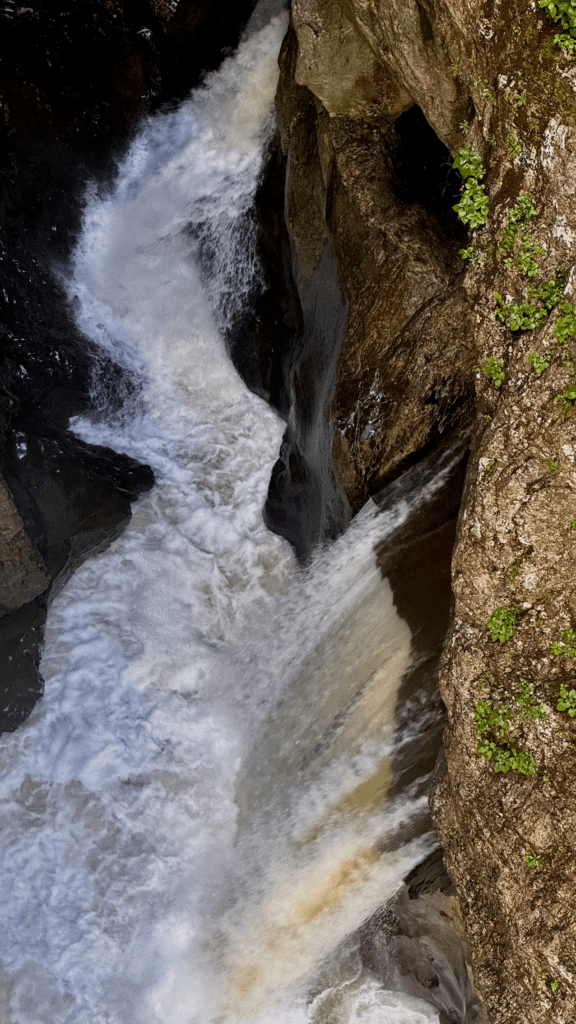
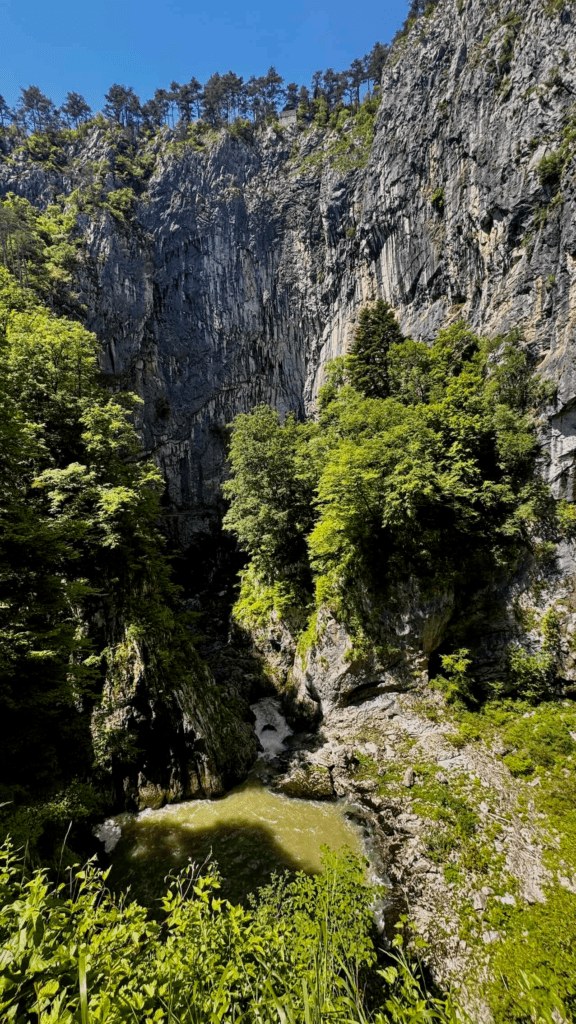
From the superb Soča Valley and the terrific Triglav National Park, with their white-capped mountains and rivers that run through, we went underground. After all the reckless hiking and biking on Alpine obstacle courses, we entered Hades — aka the UNESCO-listed Škocjan Caves — in mint condition. We gawked at the sparsely lit “huge, spectacular subterranean chambers” during a 2 km hike that included 700 steps. Way down below on the floor of the underground canyon, the Reka River, which started carving out this bewildering masterpiece millions of years ago, was thundering through with torrential force. The days before it had rained a lot and the roar was deafening. With great scenographic drama, the murky river pushed on toward its final destination: Italy’s Gulf of Trieste.
Inside the cave system, picture-taking was strictly forbidden. It would have been difficult to capture the sheer magnitude of the dark, gothic atmosphere anyway. Below are some impressions as the river is leaving the last cave.


After this Dantesque descent into the Center of the Earth, we thought it appropriate to cut ourselves some slack. And that’s how our overripe bodies (OK Joost?) ended up on a Lego Duplo-like tourist train that whisked us 4 km down through a narrow corridor of encroaching stalactites and stalagmites into the first of many magical caverns of the Postojna Cave. Dripstone flowed like wax, creating Rajasthani temple-like sculptures, it posed like a waterfall frozen in time, it glittered like crystal chandeliers, it hung like transparent veils in Ali Baba’s cave. We strolled around in wonder and awe from one brilliant chamber to the next. No awe-inspiring thunderous gloom over here, but uplifting fairy tale magic. And although we were in a group of 50, everybody was strangely quiet, whispering as if visiting the biggest underground cathedral on Earth. And that it was.


There’s also another kind of Slovenian “underground” that we kept coming across: the anti-fascist Partisan resistance that successfully operated underground during World War II. Many streets and roads still carry the name Partizanska, and commemorative plaques abound. However, immediately after winning the war, an Inglourious Basterds-like revenge spree put a bloody stain on the Partisans’ shiny blazon. Thousands upon thousands of anti-communists who had sided with the fascist aggressors were massacred and dumped in a couple of caves. It is a bloody chapter that still troubles Slovenia to this day.Maybe that’s why the exceptional lyrics of their national anthem resonate the way they do, especially in the precarious times we are living in today.


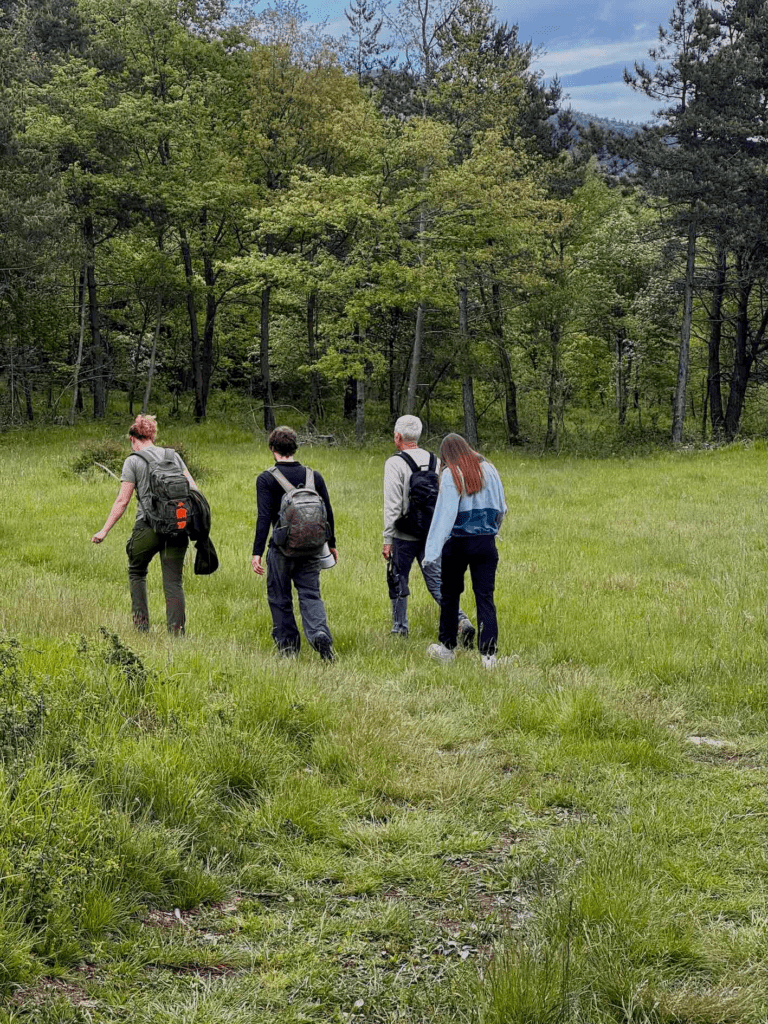
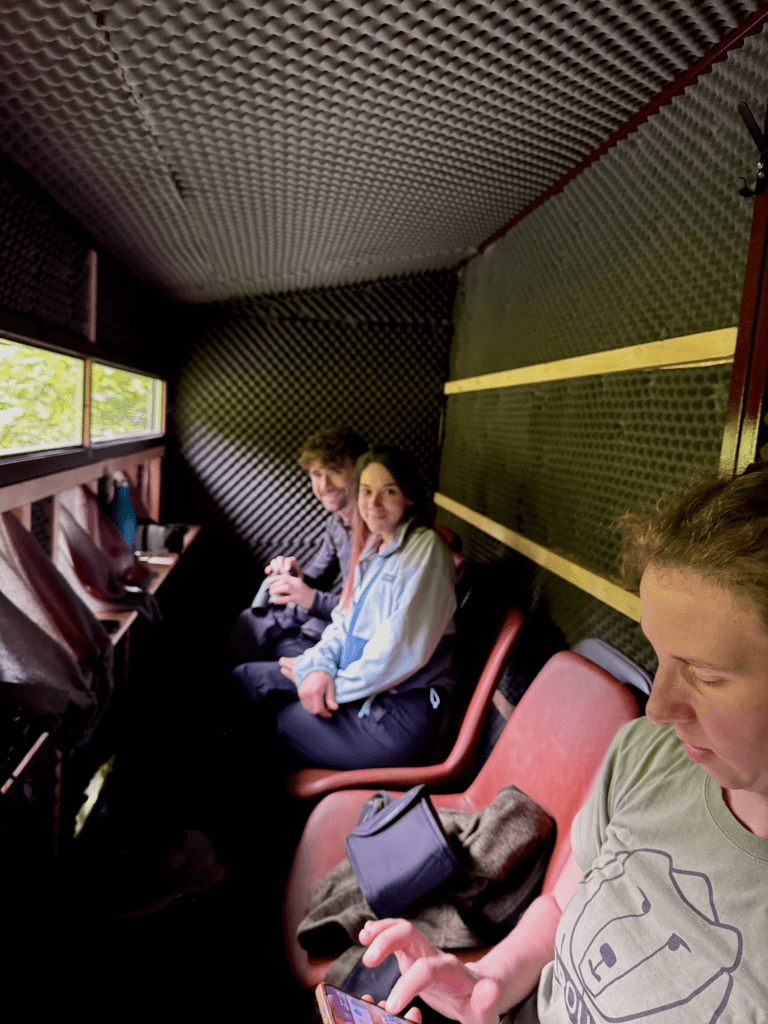
What we appreciate most about Slovenia is the love Slovenians have for their forests, mountains, waterfalls, rivers, limestone caves, and animals. We must admit that our Slovenian bear-viewing expedition wasn’t a success, though. We were sat in a bear hide for over 2 hours and told to make no noise whatsoever. A gulp from a water bottle rang out like water gurgling through a sinkhole. The bears never showed up. We did spot a marter through the infra red binoculars, and at one point my head with its cold cheeks. By then, the sun had already gone down, and the gurgling had given way to the occasional snore.
Nevertheless, their genuine love for the natural world in general, and their urge to educate their fellow humans about it, lest it all be lost, truly gives us hope.

We were surprised to learn that this love and sense of responsibility for nature extended all the way to the other side of the globe. When we dropped off the young couple at their hotel, Hop House, we noticed their billboard promoting a brand-new project called Neotropica. Intrigued, we stepped inside to check it out, and once again our jaws dropped to the ground: a small team of fanatic jungle and coral reef lovers had created a tropical fever dream indoors, complete with poison dart frogs, leaf cutter ants, snakes, Jesus Christ lizards, and an Amazon rainforest where a tropical storm is very realistically simulated with the sound and vision of rising wind, pouring rain, and rolling thunder. Apparently, what once started as a personal fascination of a Slovenian rockstar named Klemen Ogrizek, evolved into a state-of-the-art educational center. We were deeply impressed.

By now, the young couple will be back at work and we have just crossed the Croatian border. Nasvidenje, Slovenija, you have been very good to us.


2 comments on “My oh my, river deep, mountain high.”
Comments are closed.
Ongelooflijk…ook met Vinnie vinden jullie de mooiste plekjes…zeer mooi om te zien. Slovenië, nog niet geweest, maar zeker op de wishlist. Geniet er nog van!
Hey Natascha, waar gaat het naar toe dit jaar voor jullie? Daar moeten we het toch es over hebben tussen pot en pint. Ervoor of erna. Geniet van de zomer!