Closing the loop.
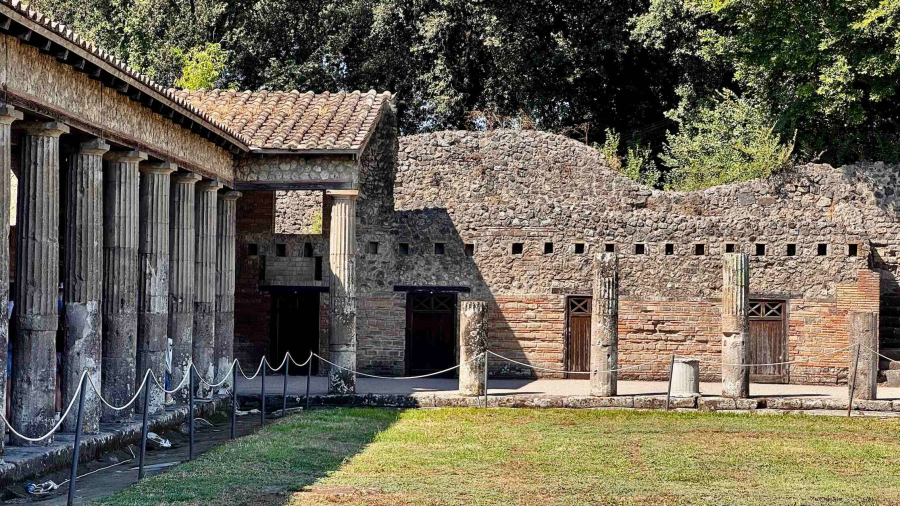
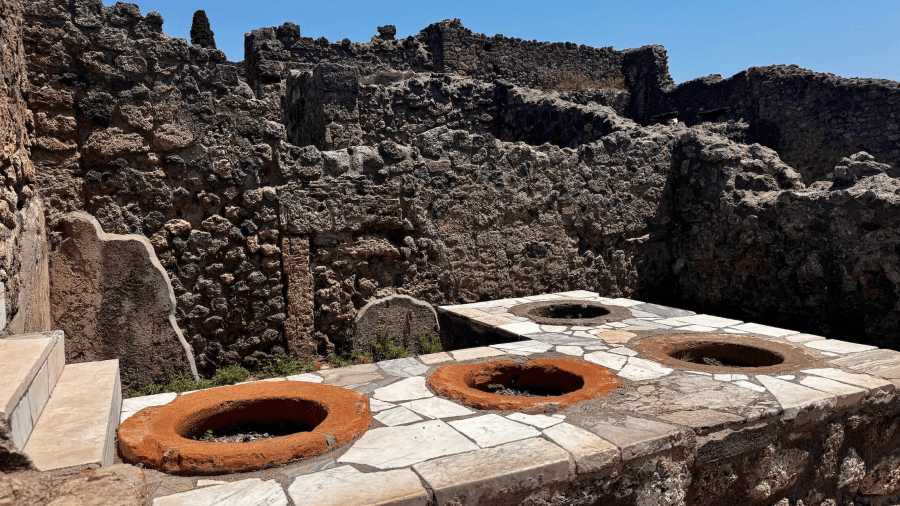
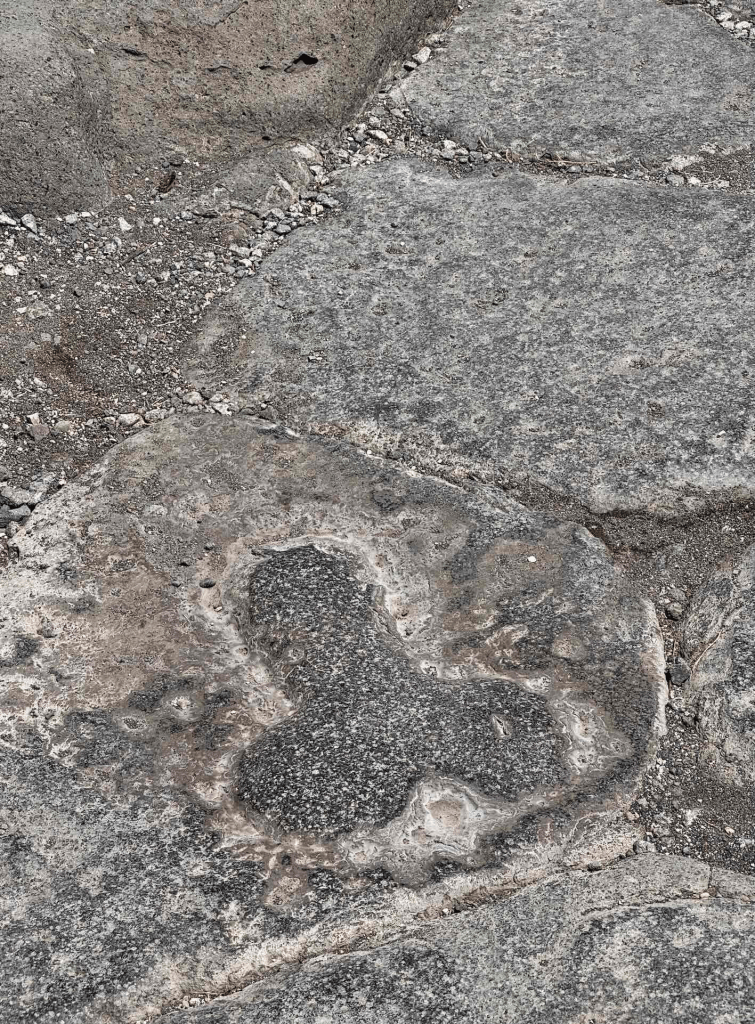
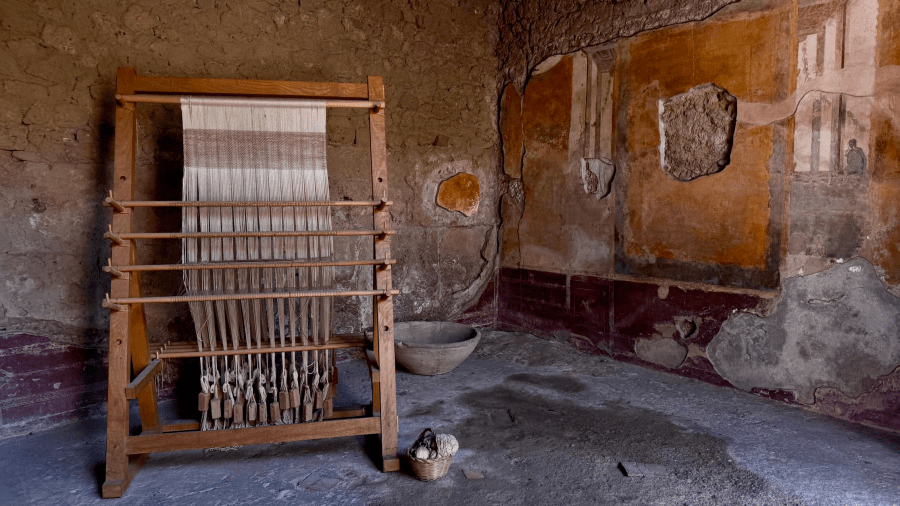
Visiting Pompeii was like walking onto the sprawling set of a binge-worthy Netflix series about the Romans. Temples, forums, and columns galore. But also grand villas, modest homes, and shops. We stumbled past deserted snack bars, bakeries, theaters, baths, and brothels, following cobblestone streets which acted like a time machine. The heat was excruciating. But thankfully not to the point of flash pulverization, the Deities be praised.
For us, lifelong lovers of lava, it also felt like a stern warning from Hades himself: “Never take my fury lightly, you heedless humans“ Indeed, in AD 62, a violent earthquake had shaken things up. But the Pompeiians innocently rebuilt beneath the volcano and went to watch another gladiator game. But as we all know now, in AD 79 it was definitely game over.

Vesuvius last erupted in 1944 and his present sleep is being closely monitored.

“It is not art, it is not imitation; but it is their bones, the relics of their flesh and their clothes mixed with plaster; it is the pain of death that regains body and form.
You, my Fiorelli, have discovered human pain, and anyone who is human feels it.” Luigi Settembrini, February 1863.






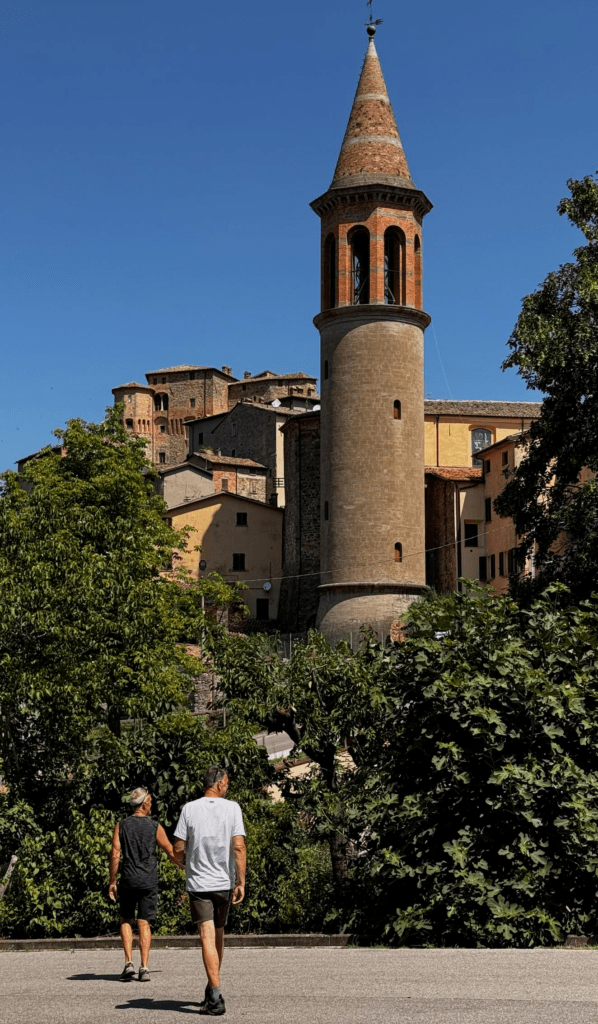
After Pompeii, we were ready to flee the heat and head for the mountains in search of some much-needed respite …and a whole lot of human connection. At the very same time, in Belgium, which was enduring its own heatwave, our longtime mate Maxime expertly folded his 1,95 meter-long frame into his converted little Kangoo and set off in our direction for a long-overdue reunion. Our destination was the home of our Belgian friend Vincent, who we met for the very first time in Burundi when we were all still young and immortal. Now, together with his amazing Peruvian wife Sara, Vincent has created a little paradise in the Marche Apennine Mountains overlooking the village of Borgo Pace, which is Italian for “Village of Peace” . There is no such thing as coincidence.


We reaffirmed our bond by projecting the World Cup match onto one of Vincent’s whitewashed walls. Maxime had brought the projector for the occasion. During the hydration breaks, we feasted on homemade empanadas, tiramisù, and Italian wine, and alcohol free beer for me. Fortified by food and friendship, we watched in solidarity as the Red Devils finally fell to Spain, but not without putting up a sportive fight.
The next day, extra consolation arrived in the impressive form of 1.6 kilos of premium dry-cured meat at Osteria Del Boscaiolo, (The Tavern of the Lumberjack). More wine flowed, as did the conversation and the cultural exchanges in Spanish, Italian, English, and Flemish. Heartfelt promises to meet again in the near future were made, and sealed with hugs and three kisses. How privileged we are.


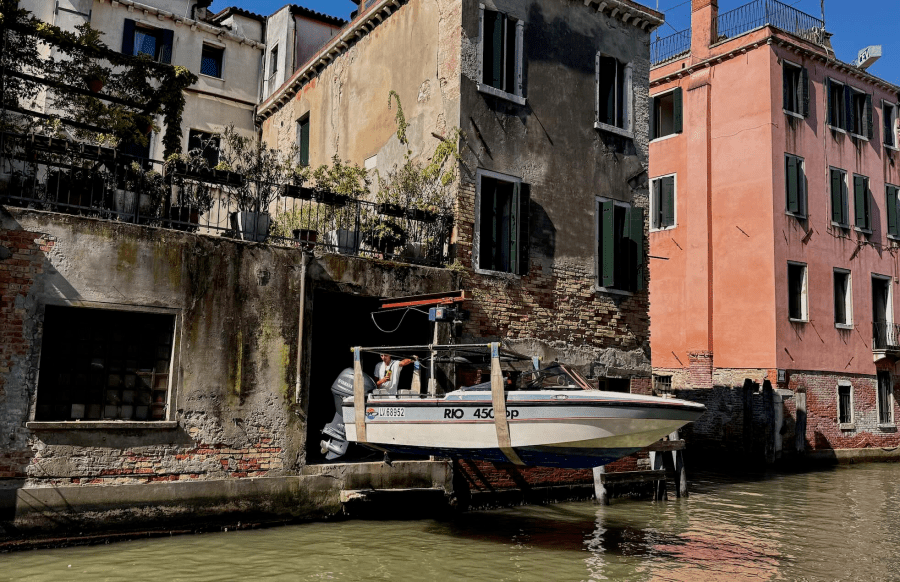
But the time had come to head home after three months on the road with Vinnie. Maxime insisted on showing us the quaint little Muppet-like theatre in the village called Sant’ Agata Feltria which he had discovered on his way up . What a find indeed. The “Teatro Angelo Mariani” was built in 1605 and it is Italy’s oldest surviving all-wooden theatre where we were free to act out a Statler-and-Waldorf scene in one of the upper boxes. After that, we bought a pizza and Maxime a truffle and a quick glance at the map revealed that we were only a four-hour drive away from Venice and the 2026 Biennale. « A brilliant idea », we thought. On a spur-of-the-moment decision, I bought tickets online for all three of us. I can be wonderfully impulsive. We arrived on a Sunday at the dedicated campervan parking area, with overflowing showers and space for one hundred campervans, parked tightly like sardines in a can. But Venice was only a 20-minute ferry ride away, and the park keepers gave us the kind of warm welcome of which only Italians have the recipe. We were eager to start exploring the next day, Monday. That’s when it hit us: Monday was the Biennale’s closing day. Luckily, Venice never disappoints. On Tuesday, My Driver and I returned for the exhibitions and got completely overwhelmed, which is what happens when you spend a day in a place of wonders that could easily keep you captivated for at least a month. Maxime has now a Biennale ticket tucked in his backpocket, ready to return should the Muse inspire him to do so.


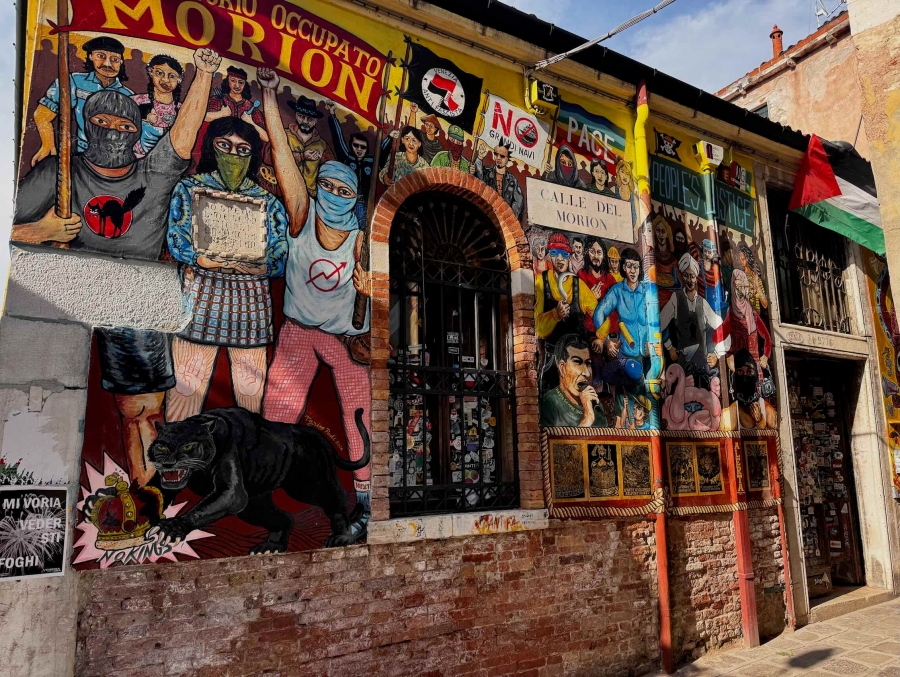
This year’s theme of La Biennale di Venezia, “In Minor Keys“, gives a major platform to the artistic voices of women, sexual diversity communities, immigrants, war victims, and peoples that have suffered from colonialism and slavery, voices that typically don’t get a decent seat at the table of the powers that be. Meanwhile, as I am writing this post, Venetians are taking to the streets to protest the arrival of Trump’s buddy and ambassador to Italy on his 117- metre long superyacht, while most locals are struggling to keep their heads above water, both literally and figuratively.






“We are unconsolable: Cries against a genealogy of increasing violence.”

Based on images by Walaa Alnajjar and Momen Majed – Embroidery: Iman Shehaby, Ain Al-Helweh Refugee Camp, Lebanon
By September 2025, the number of children killed surpassed 20,000 which amounts to
roughly 2% of Gaza’s child population.

Image: Mohammed Asad
Embroidery: Eman Tama, Jarash/Gaza Refugee Camp, Jordan
“I will rebuild my home again. I will not leave my land.”


“Canvases assembled from rope, sisal, newspaper, fabric, photographic transfers and yarn often evoke tender domestic scenarios.
Nyamai’s work reclaims space for the quiet, unresolved dimensions of black experience often overshadowed by spectacle or simplification.”
—Renée Akitelek MBE

The sculpture Ilifa lakhe (“His legacy”)is not made out of bronze but out of green Sunlight soap, used by all low-income South African families and a symbol of inequality.

By tomorrow, Vinnie will have reached his Belgian stable. During our Adriatic Roundabout , we have been following limestone ridges from Slovenia to South Tyrol where we enjoyed one last hike before returning to “le plat pays qui est le nôtre.”
Faced with an embarrassment of choice, Vinnie’s next road trip is still up in the air. In the meantime, his 70-litre diesel tank has been replaced with a 170-litre model. Since yesterday he is also equipped with a spare wheel, ready to hit the road the very moment we have made up our minds. We will keep you posted.


2 comments on “Closing the loop.”
Comments are closed.
Nog ietsje te vroeg voor Gaume jazz 2026. Maar nooit te vroeg om mekaar terug te zien.
Wij kijken er naar uit…
Wij ook, wij ook! Maar we zullen toch best ook es bij Sophie horen of er plaats is voor Vinnie op haar erf.